Party Games for Thinking People
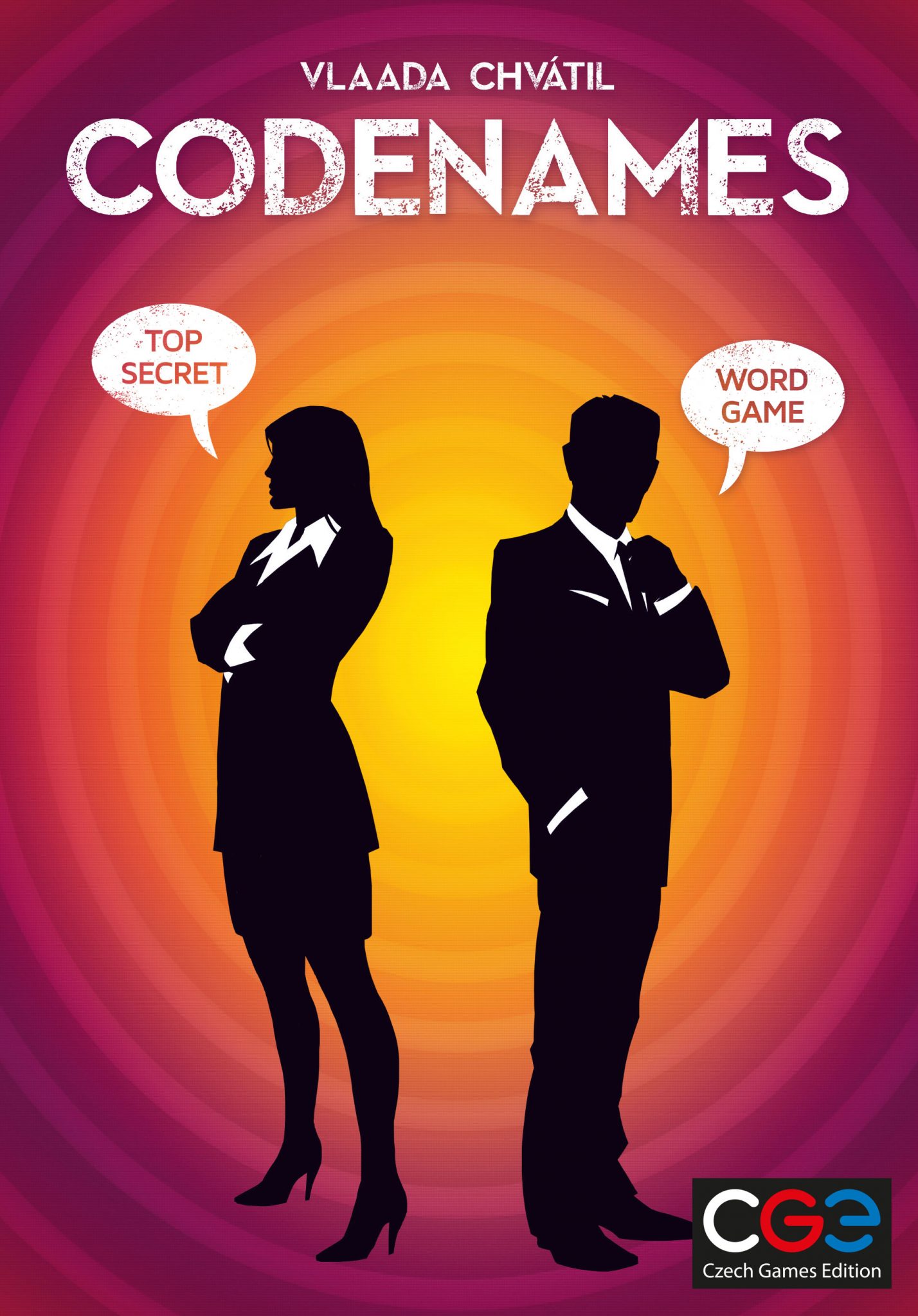
Codenames
Vlaada Chvatil is the smartest game making person in the world. One day he woke up and decided to make the best word game of all time and by the end of the day he had (that’s may not be true but I like to believe it is). Two teams will race to figure out their words on a 5*5 grid. On each team is a spymaster who can see the words they need to get on a card. Taking turns they will say one word and one number. The word relates to other words on the grid and the number is how many words it relates to. There is also an ‘assassin’ word, if your team says that, you lose automatically. Brilliant game for every age.
Dixit
Players take it in turn to be a storyteller From a hand of six the makes up a sentence and says it out loud (without showing the card to the other players). Each other player selects the card in their hands which best matches the sentence and gives the selected card to the storyteller, without showing it to the others. The storyteller shuffles all the cards reveals them and everyone has to guess which was the storytellers card. The twist – if nobody or everybody finds the correct card, the storyteller scores 0, and each of the other players scores 2. Otherwise the storyteller and whoever found the correct answer score. In other words the storyteller can’t be too vague, but neither can they be too specific!
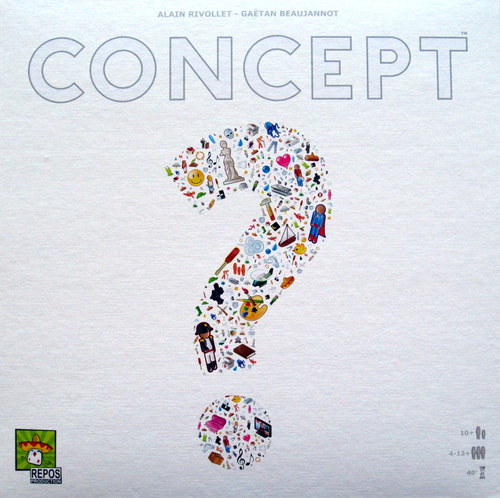
Concept
Its kind of like charades on a board. There’s a point scoring system but most people don’t bother with it. There are a tonne of symbols on the board that could represent multiple things. By placing your tokens on the board you try to link ideas together to make the concept on the card you draw. If the concept on the card is pretty tough then you break it down into smaller concepts. Excellent left side of the brain activity and lots of fun to boot.
Pictomania
A drawing game in which everyone is both drawing and guessing at the same time, giving a chance for those who excel only at one or the other skill to crush other players. Over five rounds you set up six randomly drawn cards on card racks visible to all players with seven related words on a single side. Each player receives one symbol card and one number card, which together indicate which word or phrase on the revealed cards that player must draw. Players simultaneously look at their cards and start to draw. While drawing, they can also watch what others are doing and place a guess card on that player’s stack. Only one guess per player is allowed, and once you make a guess, you can’t change your mind. Other players will ideally be playing guess cards on your stack, too. One by one, players reveal what they were drawing and the guesses that others made. Those who guess your word earn points, with early guessers earning more points, while those who guess incorrectly have their card placed in the center of the table. Once all the guesses are resolved, you determine the black sheep – the player who made the worst guesses who receives negative points. You also lose points for every person who didn’t guess your word. Confused? Don’t worry, once you get it, its amazing and its also by Vlaada Chvatil, did I mention that guy’s a genius, I guess this was his best drawing game ever day!
Time’s Up!
40 Cards, divide them up between everyone who looks at their cards (yes you see some answers). Sort yourself into teams and take 30 second turns trying to get your team mates to get the people/titles on the cards by saying anything (except rhyming or the words on the card). Some are easy, some deliberately obscure to make you use roundabout descriptions to get them. You can’t pass either and if you don’t get it, the next team will tackle the same card until someone gets it. Next round you can only say one word, but can act. However, you use the same cards as the first round. Final round, equals only acting, but again, the same cards. The genius of the game is the in-jokes it creates as people use the terrible description someone did in the first round to get their team to say the answer in the later rounds as opposed to the obvious one. I have laughed to the point of crying playing this one.
Spyfall
Party Games for Drinking People
Warning, this post contains some rude stuff. Christmas is around the corner and everyone likes to have a glass of sherry and get a bit silly with a game. I know Cards against Humanity exists, but so do you, so here are some alternatives. Isn’t it amazing how predominant black and white features in these games???
Crabs Adjust Humidity
Its Cards Against Humanity, but with new all new cards (an unofficial expansion, which when you buy the omniclaw pack, just happens to have enough cards to be a CaH base set!)
Personally Incorrect
Its almost Cards Against Humanity, but you will insert a person at the tables name into the question…to make it personal!
Superfight
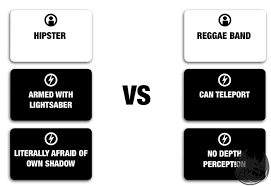
From their hands 2 players will take a character and an attribute and then argue why their dude would win the fight. Others vote on who they think should win. There are also four alternate ways to play included. Expansions galore, an R-Rated deck, Anime deck, Walking Dead deck, Geek deck plus a bunch of others.
Moral Dilemma
This game is more a discussion tool, one person reads the card, votes and then everyone else discusses and votes. See if the original person agreed with the majority or is to be a social outcast.
Snake Oil
You take turns being a character (cheerleader, football player, rock star etc…), everyone else takes two item cards and puts them together to make a product which they then pitch to you with a 30 second spiel. The character picks the one they like the best.
Funemployed
Similar to Snake Oil, except you are applying for a job and create a set of 4 qualifications you need to justify as useful things with which to get the job in a 30 second interview.
Telestrations/Telestrations After Dark
Its a posh version of the ‘Telephone Game.’ Everyone gets a phrase/word, draws it in 60 seconds, passes it to the next player who guesses the word and passes it on to be drawn again. See what the result is.
Telestrations after Dark is the same with rude words.
Anomia
Each player draws a card in turn with a symbol and word (e.g. colour, fish, street name), as soon as two symbols match at the table, the two players involved must say something from the other persons card (e.g. fish would be salmon, colour would be red). First to say it gets the other persons card. Funny because thinking fastunder pressure makes your brain go #@#%#^@$!!!
Ticket to Ride – Which Expansion to get?
Some expansions to games are great, others you buy and then barely ever play. In general the Ticket to Ride expansions fall into the former category. Which to pick is tricky and I will often find customers gazing in a fairly bemused manner trying to decide which one to get. Hopefully these next few words will help clarify your choices. I’ll give a general opinion on how good the board game World feels they are (as opposed to my own opinion), but mostly stick to telling you what they give you.
There are three general types of TTR expansions:
- Card expansions
- Map expansions
- Other stuff expansions
To play the maps you need TTR: USA or TTR: Europe. TTR: Nordic Countries and Marklin only give you enough trains for 3 or 4 players respectively, so bear that in mind when buying a base set.
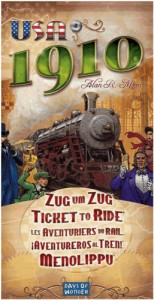
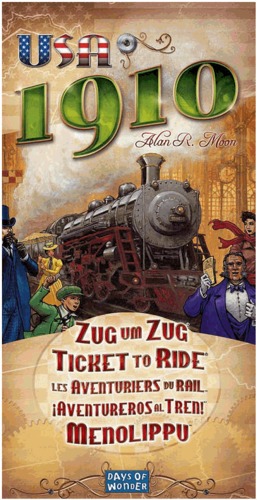
TTR USA – 1910: It adds 30 new Big City destination tickets, and replacement larger train cards. Also 4 mystery train tickets. This one is OK, to be honest, why after 10 years they still sell the base game with the tiny cards, when all the other base sets have large ones is beyond me. Some feel the expansion tickets fix the problem of the base game, so that building in the West is relevant again because more tickets go there.
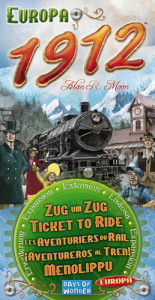
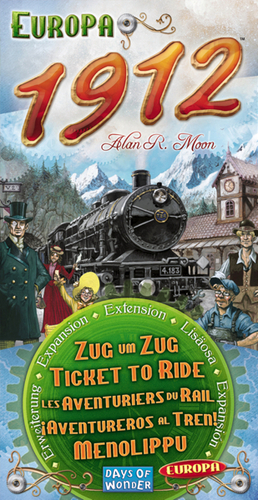
TTR Europe – 1912: Similar to the 1910 one. More tickets and slight variants of how to play. It also includes the Warehouse module, which allows you to put houses on the board, which when you build tickets to them allows you to collect extra train cards. Again, if you want more variety in the tickets its worth getting if not then it doesn’t add a lot more.
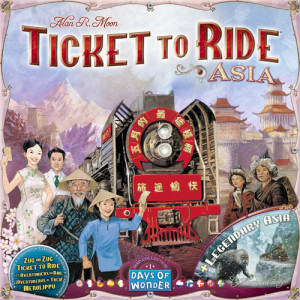
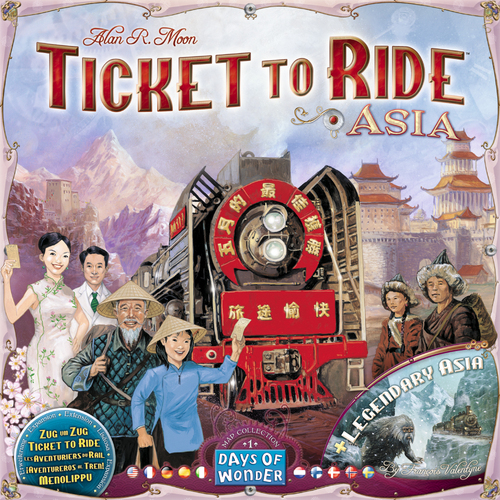
TTR – Asia Map: This is a double sided map and the most expensive of them all. It adds trains for a 6th player and card rails for team play. One side of the board allows for 6 players and a special rule twist. There are routes that penalize you a train for each spot you build on, they are placed in the corner of the board. Each train you have there at the end of the game is worth -2pts. The other side is a 2 vs 2 only board. You have a communal hand/routes which you use the card rail for as well as your own cards and routes. You win if your combined score with your partner is greater than your opponents. This one is excellent as it gives you two very new ways to play the game, especially the 2 vs 2 twist.
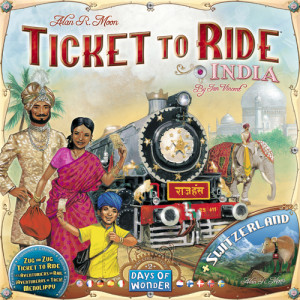
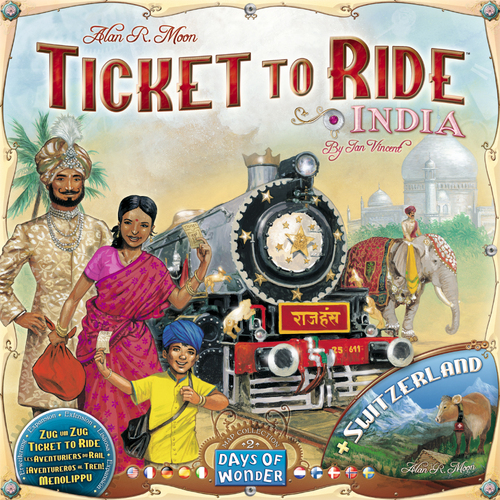
TTR – India/Switzerland Map: The India board was a winner of a fan contest to design a map. It only plays to 4 people and offers a couple of new ways to score points through connecting cities on multiple tickets. The Swiss map is a 2-3 player only board. Many of its tickets instead of going from city to city, go from country to country or country to city by linking routes to France, Germany and Italy. Its a very tight map and great if you only play as a couple because it offers the tension that USA and Europe with 4 or 5 players would offer as the competition for space heats up.
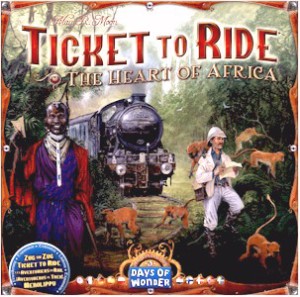
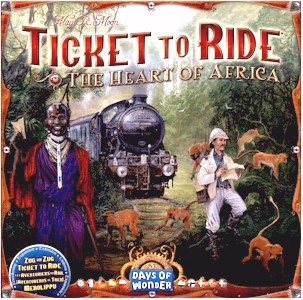
TTR – Africa Map: this is a normal 2-5 player single sided map. The tweak is the terrain cards which are a separate pile of cards similar to train cards which you can draw as well. Under certain conditions you can use these cards to double the value of the routes you build. This one is a little cheaper than the rest and adds a nice variant to the game by forcing you stick to the more populated coastal areas or dive into the middle where routes are tighter but more valuable
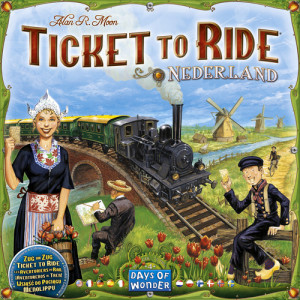
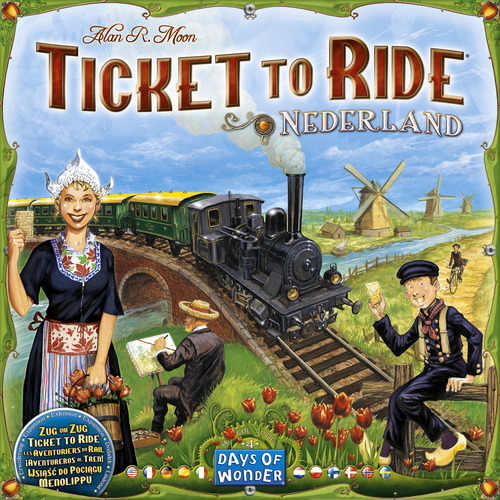
TTR – Netherlands Map: Money, money, money, MONEY. Every route on the single sided board is a double which are both always used no matter the number of players. To build anywhere you must pay 1-4 coins. The first player to build on a route pays the bank. The second player to build on a route pays the first player who went there. You start with 30 coins, if you run out of cash you must take a loan, which costs you 5 pts at the end of the game if you can’t pay it back. Another good one, there really isn’t a bad map expansion to be fair 🙂
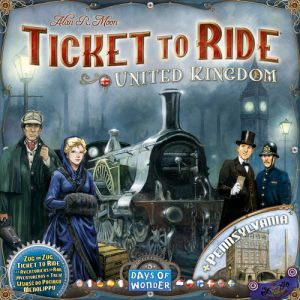
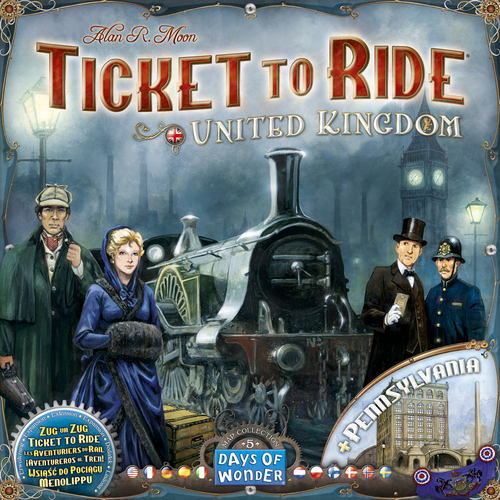
TTR – UK/Pennsylvania: Woah, this one takes TTR to the next level. UK involves a kind of technology tree. You start only able to build 1 or 2 train routes. By spending wild cards you acquire new technologies that give you the ability to build longer routes, go over water etc…madness. Pennsylvania now brings in stocks. There are a variety of companies that you can gain stocks in. Some only have to 2 shares, other up to 15. If have have the most shares in a company at the end of the game you get bonus points, with more points going to the companies with the most shares. To acquire these you claim certain routes on the board, so no more holding onto lots of cards to see what everyone is doing, you need to get on the board quick to start claiming the shares, while also trying to get your routes as well….mind blown!
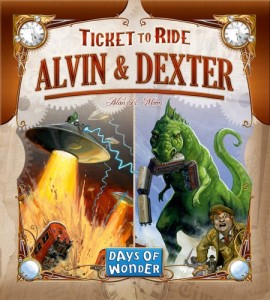
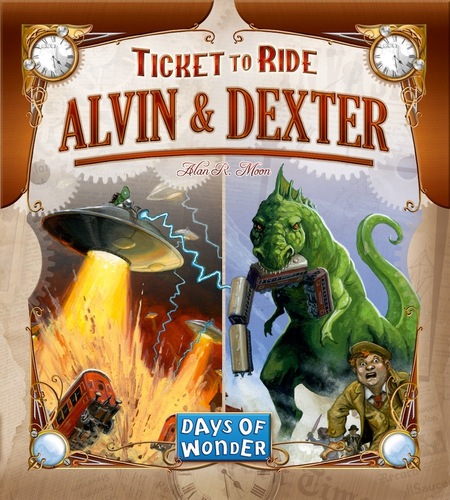
TTR – Alvin and Dexter Monster Expansion: Two little monsters stomp around the board being a pain in the bum. These monsters stymie players both during the game and once it ends. During play, no routes can be built into or out of a city where Alvin or Dexter are currently nesting, and during the final score tallying, any destination ticket showing a city where either monster stands is worth only half its normal value. Spend wilds to move them around the board. Can be played with any of the boards. A silly, but cheap and cheerful one.
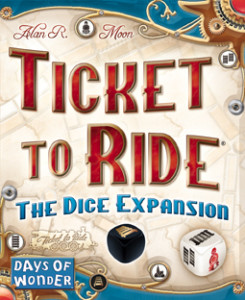
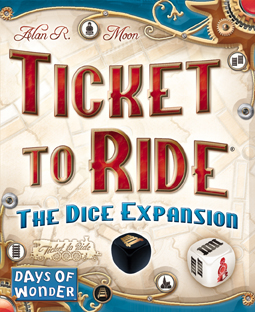
TTR – the dice expansion: rather than draw and collect Train cards, you roll five custom Train dice each turn. Depending on the outcome you can re-roll some or all, then use the dice to claim routes on the board; grab route tokens for future use; or draw more destination tickets. Its tough to find this one, but its the least popular of the expansions, so no huge loss.

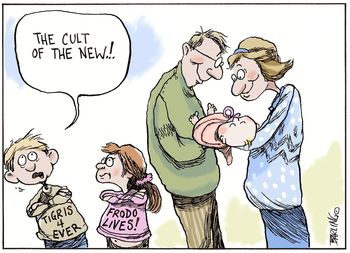
The Cult of the New
The Cult of the New, its an old but increasing trend in gaming. We are more attracted by the shiny, pretty item with the big NEW sign above it as opposed to the tried and trusted classic we know has survived the test of time. In some realms this makes sense. Video games will develop new technologies that allow the gamer to do more. Cars have rear view cameras, play DVDs, can fly and so on. Board games can create new mechanics, but they are usually just different, not necessarily better.
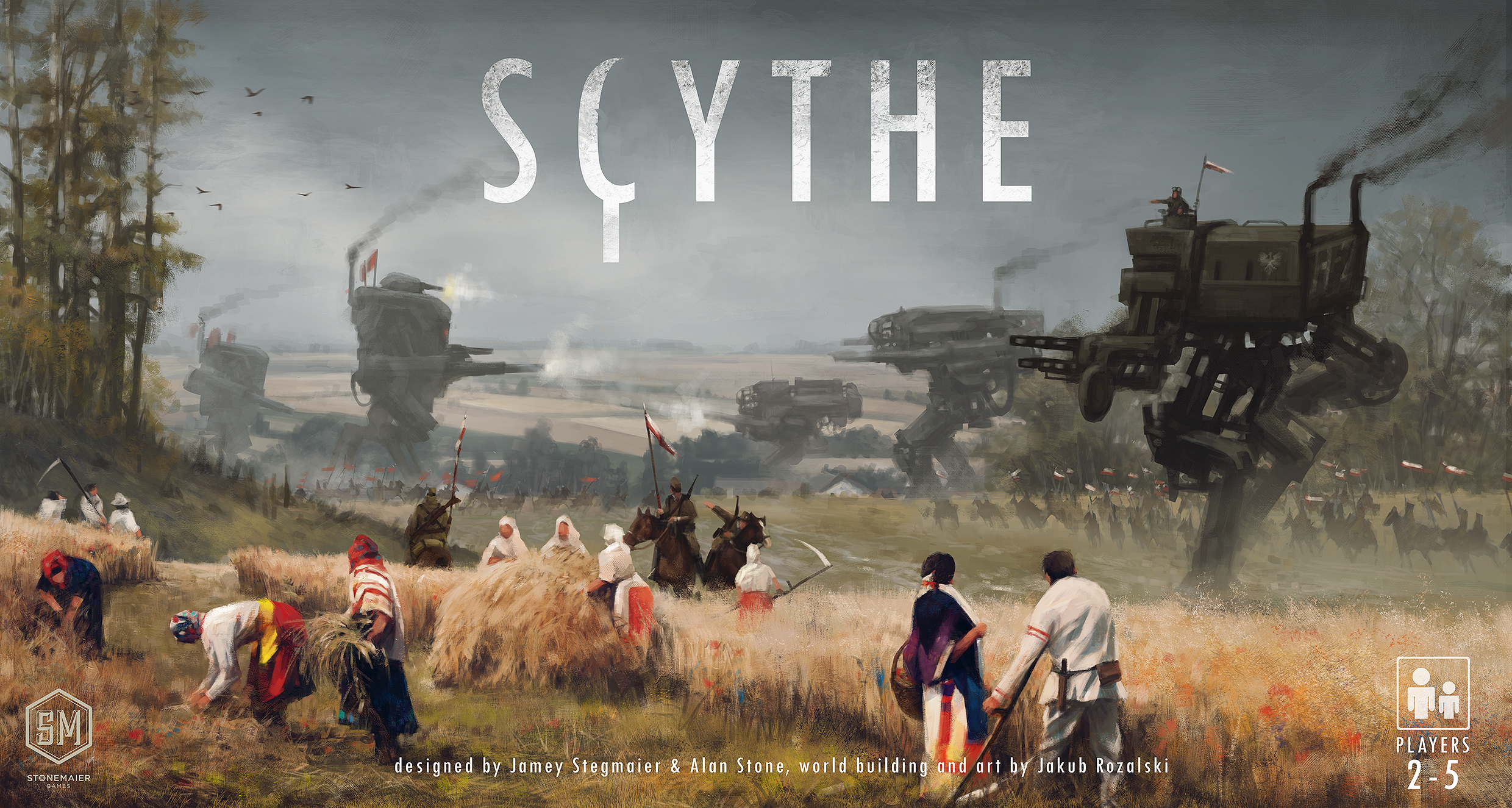
Has there been a better abstract game invented since Chess or Go? The growth in gaming that started in the late 70’s has increased the quality in games ten fold, but some of the best games came out years ago and yet we will ignore these ones in favor of more recent games that probably aren’t as good. I understand that my business and the game industry in general relies on this to survive and for that I thank all of you that are excited by the shiny stuff. Scythe is currently on Kickstarter and is set to break records for a non-miniatures game.
It looks amazing and Stonemeier games have a great track record for well made and playtested games, but is it better than Eclipse a game it kind of reminds me of. How many people who have backed it have played Eclipse and given the choice to get it would take that instead? Not many I would think. The art is amazing and the design looks very solid if not exactly particularly different to many that have gone before it. But what drives this need to get the latest thing and be the first to play the latest game? Do we have more fun playing a game because its new? Isn’t often better to play a classic that everyone knows really well and battle it down to the wire against competent opponents?
Although it is debatable, some of the best games of their genres are:
Negotiation: Settlers of Catan (1995), Cosmic Encounter (1977)
Area Control: El Grande (1995)
Tile Laying: Carcasonne (2001), Tigris and Euphrates (1997)
Route Building: Ticket to Ride (2004), Age of Steam (2002), Thurn and Taxis (2005)
Dice Rolling: Perudo/Liar’s Dice (along time ago/1987)
Deck Building: Dominion (2007)
Worker Placement: Caylus (2005), Agricola (2007)
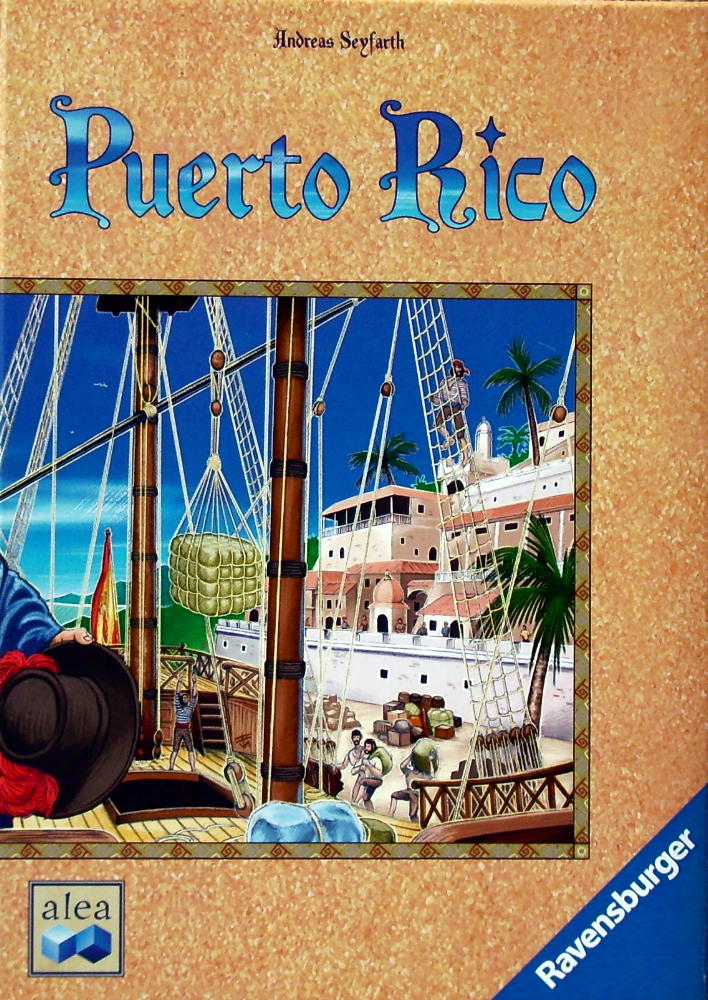
Some are still selling like hotcakes, but others have faded away, trying to convince someone Caylus is really good is a lot of work. Graphic design from 10 years ago doesn’t help, but neither does the fact it is old. Which is crazy because good games really don’t age poorly. A good game now will still be a good game in 10 or 20 years time. If you like medium weight, strategic Euros, there really is no better game than Puerto Rico. It is almost a perfect game design in my opinion, but if you look at that box cover now, bleughh, pretty awful looking!
Don’t let that cover put you off though. When you come down here feel free to ask us about some of the older games we have. They are dead brilliant, and we love to see them hit the table, but knowing what to pick can be tricky. Like movies and books, a classic may look old, but is still great even 50 years after it came out.
But don’t stop buying the new stuff cos we’ll go out of business, just try and throw in the odd older classic here and there. You may be surprised. Kind of like when you play Cards against Humanity with you Grandma and she wins, because she’s been around for a while and done and seen half the stuff on the cards, you just never saw her that way cos she’s old….