Letter Detectives

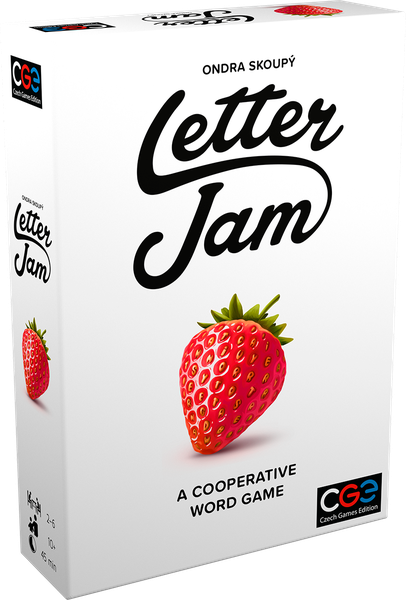
Letter Jam

Do you like word games? Unless your answer is a resounding ‘YES’, then probably move on. If it is, then oh baby, do we have a game for you. This one is a tricky game to explain in words. It’s a co-operative game where the objective is for everyone to unscramble their 5 letter word correctly. Getting to the point where you can even unscramble the letters is the tricky part, and I mean TRICKY, TRICKY, TRICKY, TRICKY.

I’ll try and explain how it works in point form:

  1. Get a load of cards
  2. Make a 5 letter word from those letters, discard the excess cards.
  3. Shuffle the 5 letter word and give it to the player on your left. They and you put the 5 cards face down in front of them.
  4. Pick up the first card and place it in a stand facing away from yourself so everyone else can see the letter.
  5. If playing with less than 6, put a letter in a stand for each missing player so everyone can see 5 letters plus the back of their own.
  6. Put the wild (*) card in the middle.
  7. You will now get a set number of clues to help everyone guess their word (10-15 depending on player count).
  8. Any player who wants to will make a word from the letters they can see using numbered poker chips to indicate which order in the word the letters are i.e. #1 is the first letter.
  9. Everyone will write down the information they get on a sheet in front on them e.g. ?INE (? = your letter you can’t see). That could be WINE or PINE or MINE.
  10. Any players who think they know their letter puts its face down and turns up the next one.
  11. A player gives another clue, this time you see SWI?E* (* = the wild in the middle), . You are pretty sure you letter is P as it fits both clues, so you put it face down and turn up the second card.
  12. Keep doing this until you run out of clue tokens or everyone thinks they have their word. They then unscramble their letters still face down and when everyone has done it, thee big reveal where you turn over the cards letter by letter hoping it spells a word.
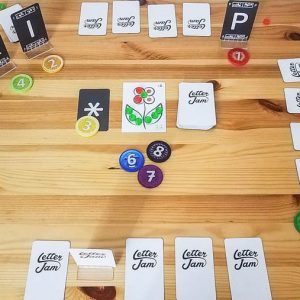
At first glance players give what they believe are the best clues, usually long words. But you quickly realize that they aren’t always the best. The best clues are those that allow as many players to figure out their letters as quick as possible. It also forces everyone to give clues, because if only one person gives clues they will never receive information about their word. You can even realize how important the initial word you give your neighbor can have a big impact on how the game goes. On our second game, 4 of the 5 players made words with only 1 vowel, trying to make useful words from W P R W B T * is really hard! That layer of not just trying to make a word, but to try and see that word from every other players perspective is what makes this game such a facsinating puzzle and so tricky. You’ll praise the genius who comes out with a clue that helps 2 or 3 people, and curse the fool whose word is absolutely useless to everyone. Highly recommended, but only if you really like word games.

Detective Club
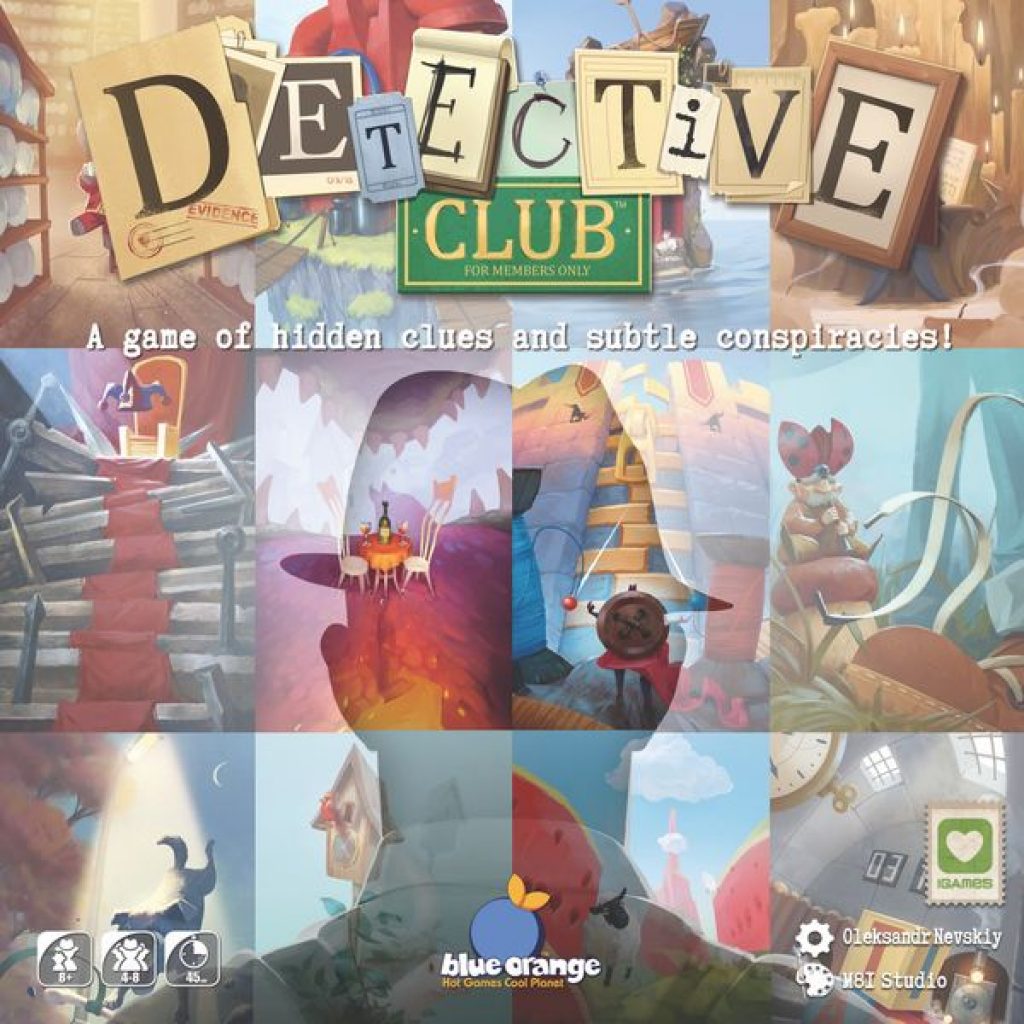
Designed by one of the creators of Mysterium, this game plays like Dixit crossed with Fake Artist Goes to New York. Never heard of them? That’s OK, they are both really good games.

The premise is that each round, one of the players secretly teams up with another — the Conspirator — and tries to make them guess a secret word using just two illustrated cards. Other players are detectives, who also know the word, but don’t know the identities of each other. Detectives have to find out who the conspirator is, making sure they don’t get accused by their fellow players!

At the start of each round the lead player will look at the hand of 6 cards and find two with a matching theme, says ‘clouds.’ They will write clouds in 4 of the 5 notepads (in a 6 player game) leaving one blank. Then shuffle the pads and give one to each player. 4 now know the word and one doesn’t. The lead player plays one of their cards and in turn order the other players put down a card that shows they know word they saw, the player with the blank tries to use the cards they see to play a card that looks correct. The lead player then plays their second card, followed by everyone else. They then verbally reveal the word and in turn order the players will justify why they picked their cards. After that, a discussion will occur and players vote who they think the conspirator is.
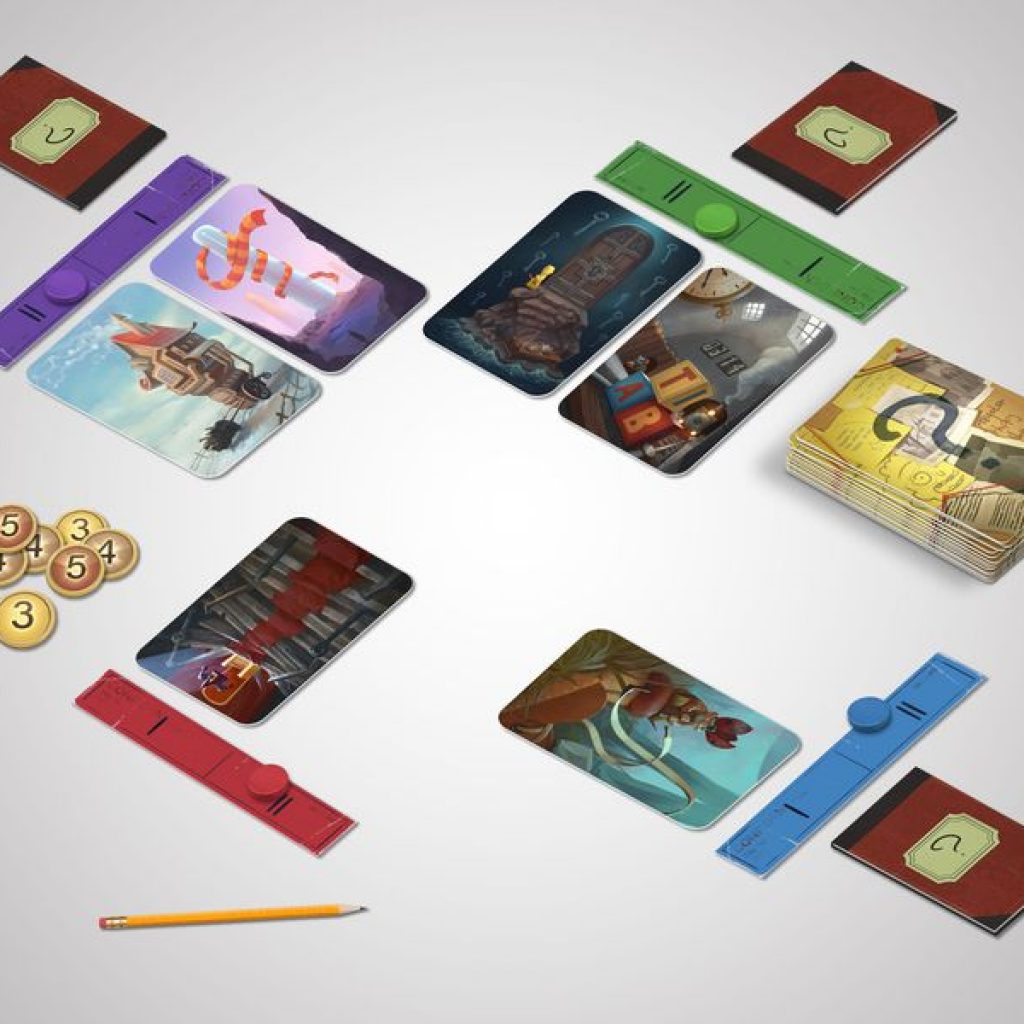
This is a game designed to create fun situations. The art on the cards is crazy weird offering lots of interpretive justification as to why a player may have chosen a card. Frequently you WILL get cards that have nothing to do with the word you received. I had one game with ‘forest’ as the word and the best card I had was an octopus’s tenticles looking foresty. Someone else also had terrible cards in front of them, we accused each other vehimently and ended up splitting the vote. It turned out to be neither of us and the conspirator was just sitting back enjoying the ride.

Its easy to play, works well with kids as young as 7 or 8 (so long as you keep the words simple). The variety is there as its a very different experience playing as the main player, conspirator or regular player. It can play up to 8 players, but does need at least 4 to play. If you own Dixit, you can also just swap in these cards as an alternate set of cards for that game too and vice versa.

Great fun.

The Board Game Library

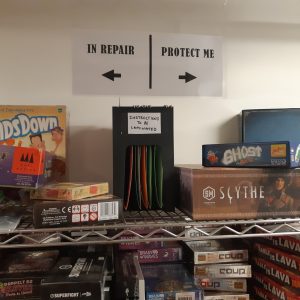
The Game Library. It’s why you come right? (other than the milkshakes, candy, beer and friends). Well over the last 6 years the way we handle it has evolved. Initially we created it like this:

Jack’s game collection + Bill’s game collection + 6 months of thrift shopping for the classics = Library

Over time we added more games, then we ran out of space so we put up more shelving. Then we ran out of space and we had to run it like a nightclub…one in, one out! We now have to ask ourselves 2 questions: a) What do we get rid of and b) what is worthwhile enough to get rid of a game in the library.

a) Is the game being played? It can be the best game, but if it’s not being played there is no point having it in the library. This can be because of a number of reasons; it’s too complicated, too long, no-one knows it’s the best game because the box cover art is bloody awful. It can be beacause the game is out of print and become unplayable because of lost pieces or damage and there is no way to replace it.

b) Is the game going to get played? Good 2-player, 4-player and party games with few rules, but lots of variety and replay are our bread and butter. We are more selective when it comes to the complex strategy games. We will sometimes wait a while to see if it’s really as good as initial reviews say before putting it in the library. Some games like Feast for Odin we won’t put in because the table space required to play is so huge it will barely fit on the table, even as a 2-player. A game where losing components will make it unplayable we try not to put in. Also games with a well known license that will attract people to play e.g. Fallout, but are way too complicated for most people to plough through the rules and wate their time.

Expansions we stay away from, they usually just confuse people playing it for the first time and if we keep them in separate boxes, they end up getting mixed in with the original. We now keep a separate version of Catan +5/6 players behind the counter for people to ask for just to stop it getting mixed with the basic version.

We used to keep an accurate list of games in our library online, but I’d occasionaly forget to add a game or more importantly remove one that was destroyed and it became more and more inaccurate and people would come in to play that game and be sad it wasn’t there, so we just removed it.

Initially we just plopped the game in the library, but over time we learned how to protect games to keep them in good shape.

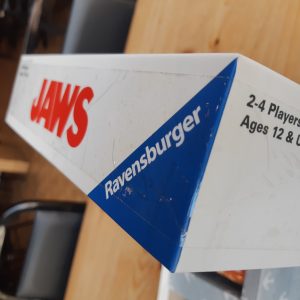
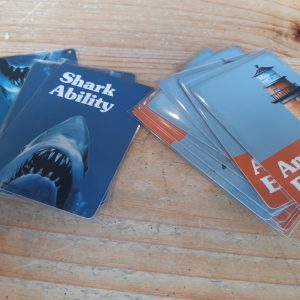
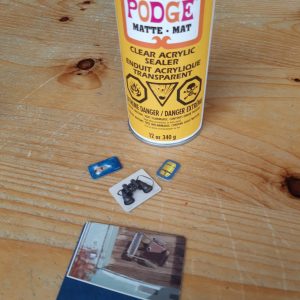
This isn’t about the cost of replacement, but more about the experience of using the game. Playing on a nasty, smelly game is not fun, so we now go to pretty extreme lengths to ensure the game stays in great shape for as long as possible. Here’s what we did to ‘Jaws’ which just entered the library:

  • We put tape around the box lid and cover to prevent the corners splitting.

  • We sleeved all the cards.
  • We sprayed all the cardboard components with Mod Podge varnish to prevent them from wearing out.
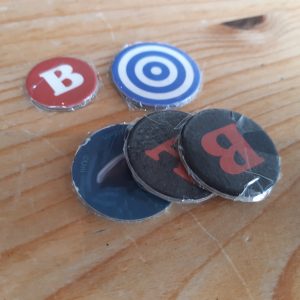
  • Tape frequently used counters and the sides of cardboard with trackers on them which tear the cardboard when moved up and down.
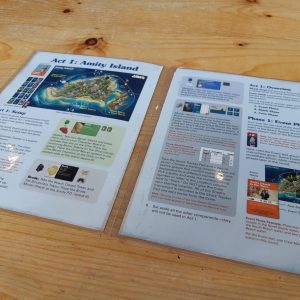
  • Laminated all the rules and then tape them together again.

Some of the classics such as Monopoly, Game of Life, Sorry etc… we pick up at the thrift stores. They get such a lot of use that they get destroyed every 3 months or so. We laminate one set of rules and move them from replacement to replacement.

The little blue and pink pegs in Game of Life…so small, always getting lost…

If you wonder why we don’t have Guess Who in the library, well the stands for the cards are such poor quality that at least one will break in every play and in the end we got tired of people telling us it was broken (which makes it look like we don’t care) and just removed it. Similar games are Mouse Trap (broken pieces again, plus everyone kept playing it wrong, setting it up before they played it, when the setting it up is part of the game) and Hungry Hippos, which we just tossed as it was so noisy you could see a halo of annoyed people around the table playing it.

The game we have the most backup pieces for is Blokus, you lose a single piece and the game is useless.


Things that drive us crazy on a daily basis:

  • Games that have the name printed on three sides of the box and people put them away like this (that one’s mostly on HASBRO).
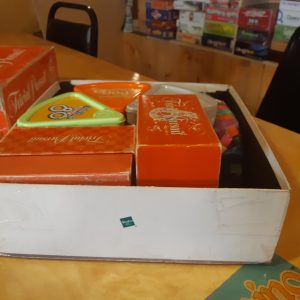
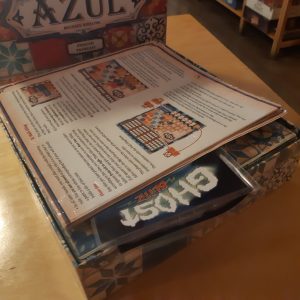
  • When someone puts the deck of questions in the box like this and the lid doesn’t close properly.
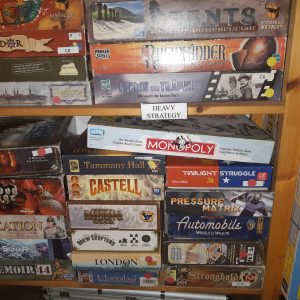
  • Putting monopoly back on this shelf!
  • When companies make the box a square, but not quite…
  • Putting the rules to one game away in another game.

My favorite question to answer is when 13 year old comes in with his buddies and asks us where D&D is in the library and I point to his mind! Then spend 5 minutes explaining that D&D isn’t really a board game and that……

3 New Games we like

Imhotep the Duel

2 players
20-30 mins

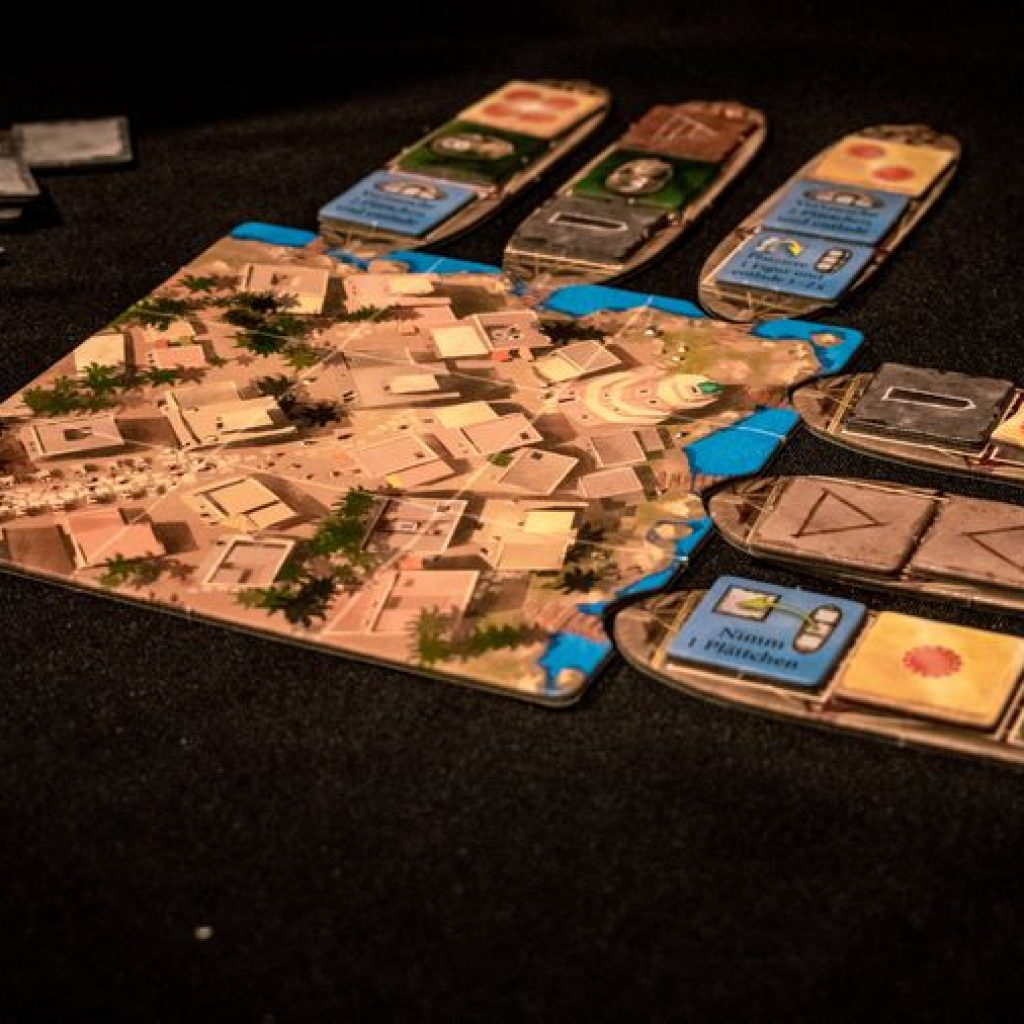
This is a great little ‘mean as you want it to be’ game. The main board is a 3*3 grid surrounded by 6 boats, 3 each are docked to 2 of its sides. The idea is load the boats with the tiles you want to try and build the best Egyption monuments which will attract the most Instagram followers in 5000 years time to pose in front of them in a way that looks kind of normal online but decidedly odd when done in real-life (to simplify that, they use a system called points, but I know what the intent was). The board looks like this:

On your turn you either add a guy to the board or ship a boat. You add the guy with the intent of getting the matching tile on the boat to the right, but your opponent then ships the boat on the bottom, forcing your worker to deliver you the thing you didn’t really want (I’m guessing they’re a slave, which are dope for keeping costs down, but the downside being they don’t really give a $h1t if you get the thing you didn’t want). If YOU ship, you get what you want, but aren’t adding a guy which means in the long term you aren’t getting as much stuff.

There are 5 ways to score points shown on your own long stringy board, which can be flipped over for an entirely different way to score. It can be mean if you are that way inclined, but you don’t have to be that way, if you just focus on taking and doing what’s best for you, then any meanness is usually just a by-product of your opponent not paying attention.

If you like Kahuna, Lost Cities style games. This one should be tried, its very reasonably priced too.

Hadara

2-5 players
45-60 mins

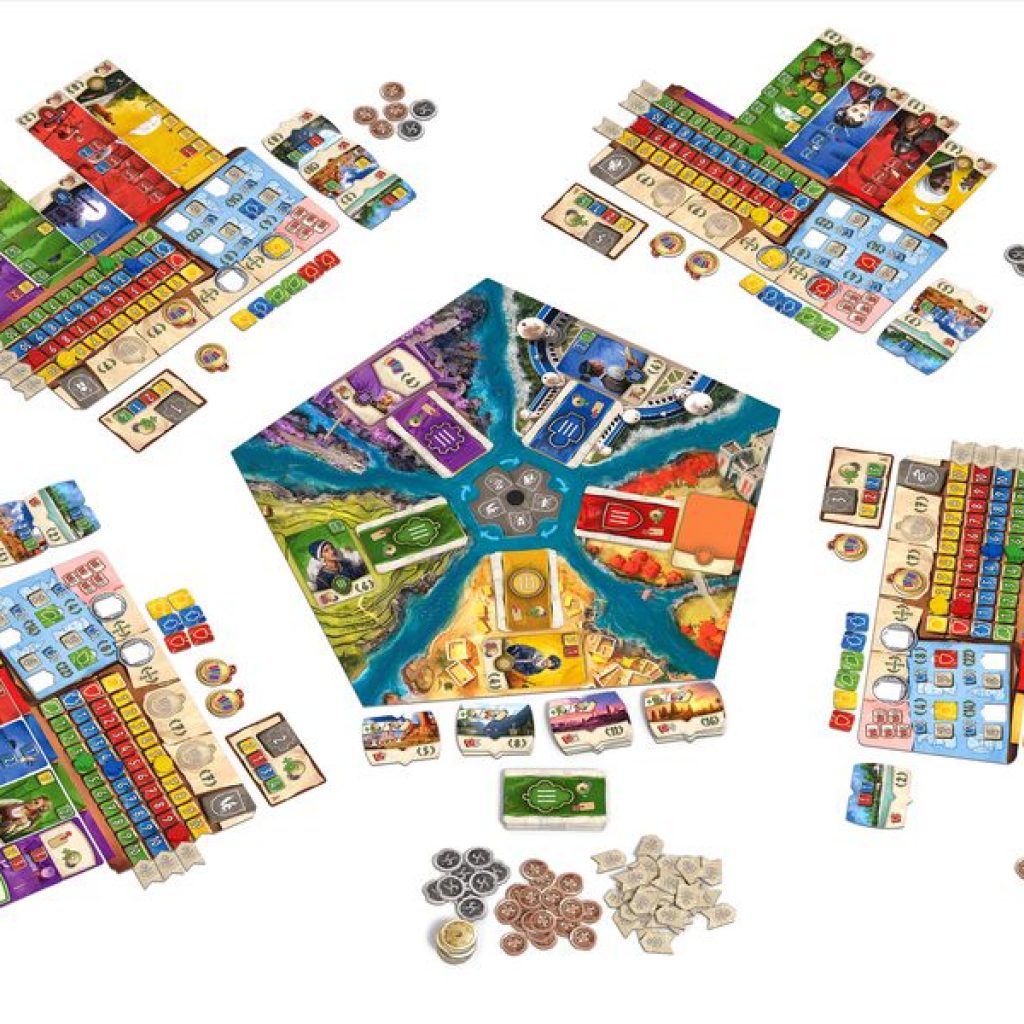
Culture, Military, Food and Wads of cash. These are the things great civilizations are built on. In Hadara you will similtaneously select 2 cards in the first part of 3 ages. Discard one to the board and then either buy the other or discard it for wads of cash. The cards will usually look a bit like THIS:


That guy on the camel is killing something, so you get to move up four points on the military track, but he is doing it tastefully, so you also get one point of culture.
Everyone knows smoking is cool, so three points of culture, plus it tastes great so one point of food!

After taking 5 cards to play or get cash, you can conquer places if you have enough miliary points, build a nice statue if you has loads of culture and get then get paid for moving up the cash track.
Then you do the same thing again, but this time you can buy (or discard for cash) the cards that you discardrd earlier in the era. Then again, you get to build a statue if possible etc…but at the end of this part you must have enough food equal or greater than the number of cards you have. If you have less you must discard cards until your food = your cards.

Repeat, in Era II and then again in Era III. There are also some purple cards that can give you some special powers and some end game medals you can buy. People will certainly compare it to 7 Wonders, but its pretty different. It’s weirdly satisfying. You are just moving up tracks, but after finishing you want to play again immediately. It is very solitary, so its scales well from 2-5 and doesn’t take much longer with more players. If you like 7 Wonders you will certainly like this one too. It has that satisfaction of constantly getting MORE, but your always just poor enough that occasionaly you can’t have everything, but not so poor its annoying.

Jaws

2-4 players
60 mins

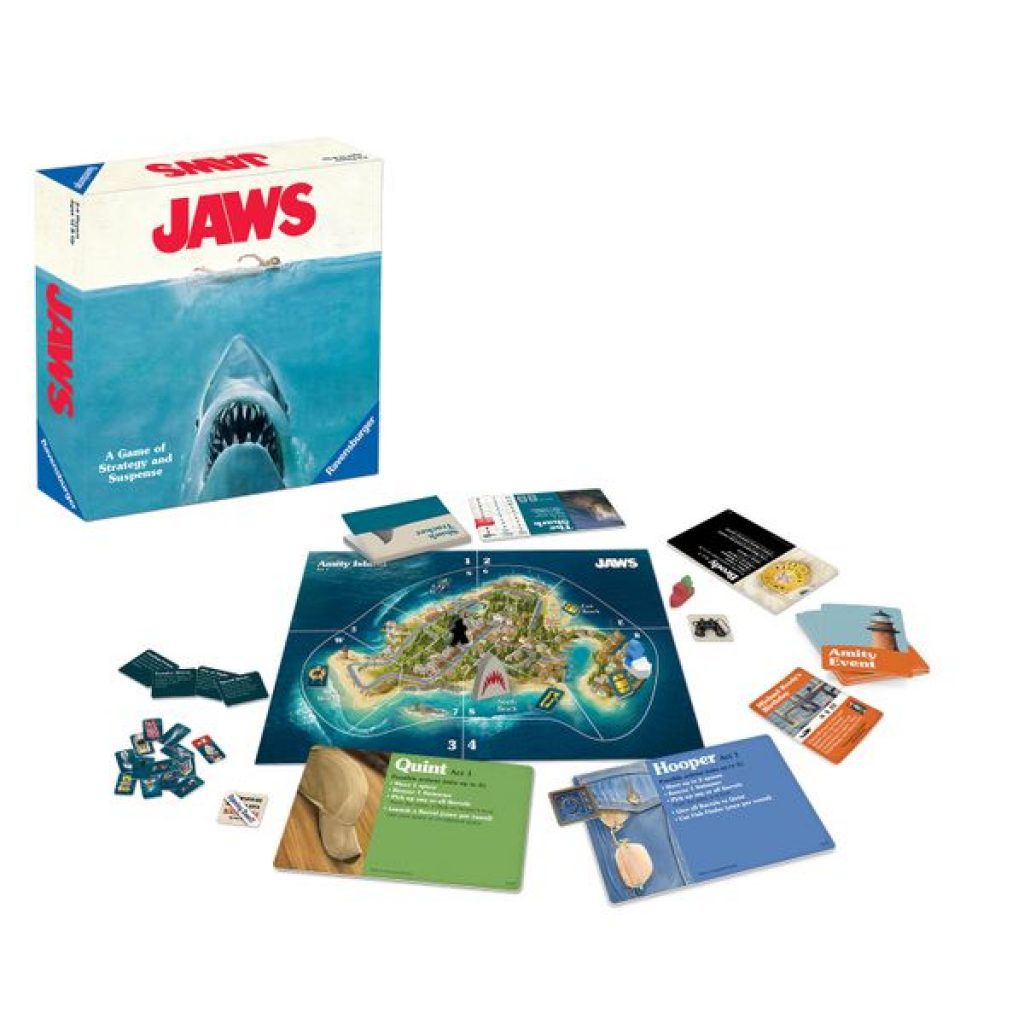
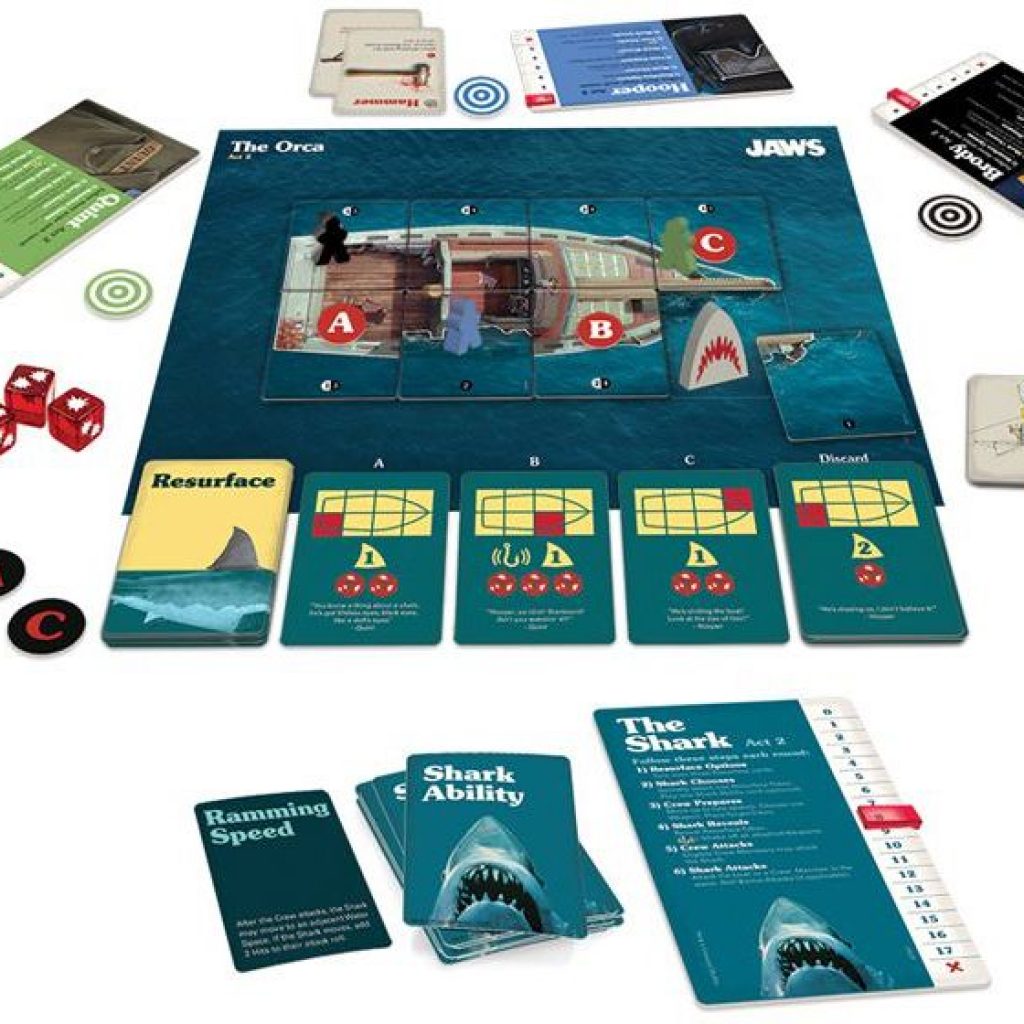
Well, this game is a prime example of how to adapt a movie into a board game. One player will be ya boy J-dog, the poor miss-understood shark who just wants attention and goes about trying to get it in the wrong way by eating people. Everyone else gets to play macho 70’s guys who drink too much and try to save the world through the medium of attaching barrels to things.

Its a 2 part game. In the first half, you play a Scotland Yard style game, where the drunken men drive around Amity in a boat trying to attach barrels to a shark they can’t see, following the clues left by the shark in the form of half eaten corpses (there are no half eaten corpse pieces in the game). They are also trying to get the swimmers out of the water so they don’t turn into shark lunches. The shark is hungry and is trying to eat as many swimmers as possible, but if he gets two barrels attached to him, then its on to the second half of the game. Flip the board!

The more swimmers the shark ate, the more advantages it has in this part. If Brody and his crew managed to accessorize the shark with the latest haute-cotoure barrels without him ruining his look by eating too much, they get the advantage.

I’M ON A BOAT, and its getting attacked by a shark. Armed with a bunch of weapons, you’ll now try and kill the shark before it kills you or sinks the boat. Each round you’ll be shown three places the shark could attack, it’ll pick one and you pick where you want to attack, all together, split up? You decide. It’ll then pop up. You will do damage if you picked the right spot, then the shark will hit you and the boat, slowly sinking it round by round until it’s dead or you are.

Lots of tension in this one. The classic trying hidden movement game. The shark needs to feed but tells you where it is when it does. The players need to get those people out of the water, but they also need to tag the shark. Then the rock, paper scissors mechanic of the boat attack. Everyone also has lots of items and special actions they can do, so its not entirely random. The tension rises as the boats shrinks and you are forced ito a smaller and smaller area.

With less players, one players will take multiple roles for the good guys. Excellent family fun 🙂

2019’s Game Gems so far…

Ganz Schon Clever/Doppel So Clever

1-4 players
10-30 mins
Complexity – 2/3 out 5

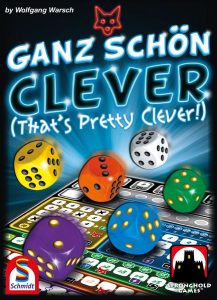
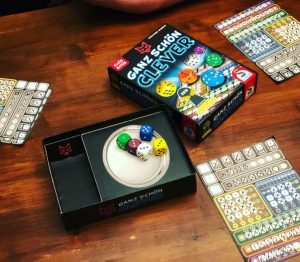
THIS GAME! Almost every all our staff have it, it’s requested by my wife (who only really enjoys party games), it’s great as a solo game, like actually a thing you would enjoy doing. You roll dice, pick one and fill in a box on your score sheet. Then after taking 3 dice your opponents take one of the remainder. It doesn’t feel like much is happening until you start to grab some bonuses on your sheet about 2/3s of the way through, then all hell breaks lose and you chain together a whole bunch of them, making squeaky noises of joy as your score explodes.

Doppel So Clever is for those who have mastered Ganz and want even more awesome scoring.

Gugong

2-5 players
40-90 mins
Complexity – 4/5

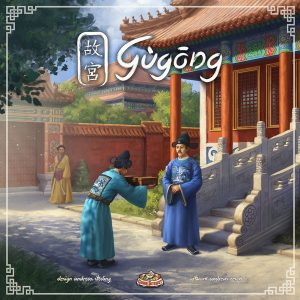
A game of gift giving. This is a mid-weight Euro, where players compete in 7 ‘mini’ games on the board to earn points. Each round you have just 4 cards and to take an action in one of the 7 areas you must give a gift (card with a number) that is better than the one there (higher value). You take the card there and it will be used for the next round. Its not a bribe, its a gift! Flows really well and has some lovely art and production, scaling pretty well from 2 to 5.

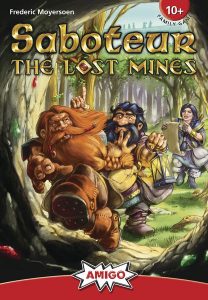
Saboteur: The Lost Mines

3-9 players
40 mins
Complexity – 2-5

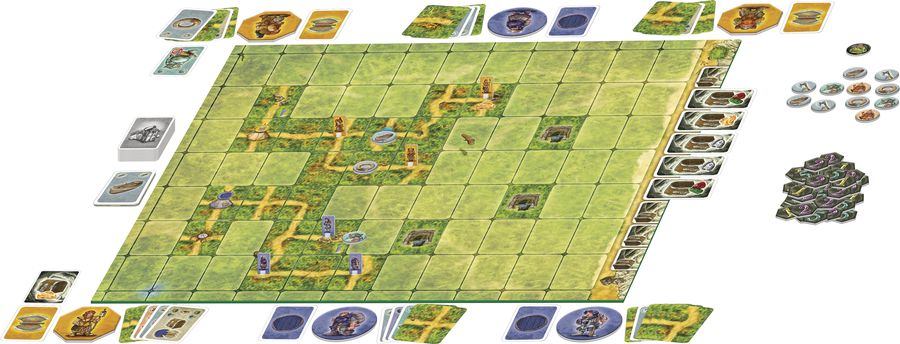
Saboteur is the OG of hidden role games and this new version adds a board and some of the best parts from the expansion. You will be on one of two teams and trying to get to one of 4 mines to get treasure. However, some people on each team will secretly be working for the other team or even just themselves. You’ll play cards to expand the path to the mines or to mess with the other players until all the treasure is collected then players reveal themselves and divide the treasure up. Highly interactive, lots of intrigue and quick playing. The sweet spot for this game is 5-9, lower player counts don’t really work. The price for this game is incredible, easily the best value game we’ve seen in a long while. Highly recommended (for large groups).

Wingspan

1-5 players
40-80 mins
Complexity – 3/5

Do I need to tell you about this? It’s going to win game of the year. It’s beautiful. Plays really cleanly. If you can find a copy and want a game that is the next step in strategy past a Ticket to Ride or Catan, this is a great place to start.

Tiny Towns

1-6 players
20-30 mins
Complexity – 2/5

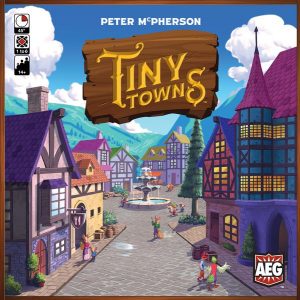
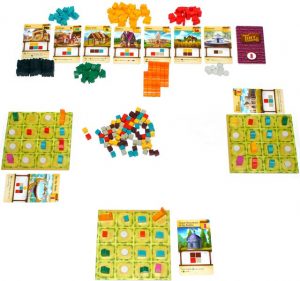
A terrific little spatial game, in which you place cubes on a 4*4 grid to create patterns that allow you to replace them with buildings. Each turn one player nominates a resource (cube) and everyone must place it on their board and may complete a building if they want. Keep going nominating cubes until everyones board is filled. The buildings offer points or abilities and each game you can use different cards to represent the buildings for a tonne of variety.

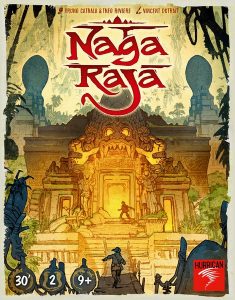
Naga Raja

2 players
30 mins
Complexity – 3/5

A 2 player game with stick dice! Another route building(ish) game, where you are trying to make a path (with tiles) from the entrance of your cave to the treasure on the edges. Each round 1 tile is available to both players. They play cards that allow them to roll sticks. Whoever has the most points on their sticks gets the tile, but they can also use other cards to mess with their opponents boards and rolls. Another very interactive game, with sneaky card play and great bits. We like it a lot.

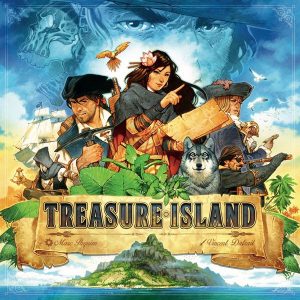
Treasure Island

2-5 players
60 mins
Complexity – 4/5

Where is the treasure? Its hidden on the map by Mr.Silver. How do we find it? With compasses and protractors and rulers. Maths for the Win. Watch the video for an actual ideas of how the heck this works.

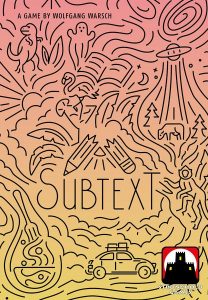
Subtext

4-8 players
40 mins
Complexity – 2/5

Its a drawing game that has a bit of a Dixit feel to it. If you like the thinky party games like Codenames then this would be right up your alley. Its also by Wolfgang (The Quacks of Quedlinburg, Ganz Schon Clever, the Mind) Warch. Here is the blub on how it works:


“Each round, one person is the dealer. This player looks at their word, then shuffles the card into the cards for the other players and distributes them randomly. By doing this, one player will have the same word as the dealer, but nobody — not even the dealer — knows who it is. The dealer then draws a picture, and you want to hint at your word so that ideally only the person who has the same word will understand what you’re depicting. In the subsequent guessing phase, all players (including the dealer) guess which player got the same word as the dealer. Points are awarded based on the number of incorrect guesses, but the dealer and their partner have to guess correctly to even get points. How vague do you want to be in your drawing efforts to still get your message across without anyone else knowing it?”

Tips for Starting a Board Game Cafe

Free advice! Normally you have to spend lots of franchise money on this, but I have no interest in franchising and consider myself lucky to do what I do and as such am happy to spread the experience. Bear in mind, our cafe is set in a downtown location in Victoria, Canada. What happened to us and works for us will not always be the same way you should do things where you are, but hopefully you can take something from it.

Handy dandy tips for running/opening a board game cafe.

  1. Your job is to make sure people have a great experience in your cafe. Everything should stem from that. It’s not up to you to decide how they have fun, just to make sure that they have the best opportunity to do so. Great food, lovely staff, fun games (Game of Life, Cards Against Humanity or Agricola). Don’t push too hard but make sure they know you are available if they need you.
  2. There are 7 billion different opinions on what a good game is and yours is just one. Ask questions to find out the best game for your customers and your game experiences are invaluable in helping them find it, but your personal opinion is really only relevant to one person.
  3. So play as many games as possible of all types. While doing so, try think if it’ll work in your business and who for. Play or re-read the rules to Game of Life and Trivial Pursuit, you’ll be asked for help with those games far more often than the latest cool strategy game.
  4. Open with a plan, but don’t be married to it. If something isn’t working, no matter how much you want it to, either let let it go or amend it. The game cafe business model is very young and it is still evolving.
  5. When you are creating your plan, it is easy to get hung up on the small details (e.g. what do I do if a customer stays all day and doesn’t buy anything?), but don’t focus on those. Stay focused on the things that matter and that will be integral to the running of your cafe (scheduling app, food suppliers, food prep etc…). You will figure the small details out as you gain experience.
  6. On the other hand be very aware and open to trying things you never thought of when you see the opportunity, they will present themselves, you just have to see them.
  7. Games are fun and this is why you are opening the cafe right? Well it’ll only be a small part of the job, the usual stuff that comes with running a business will take up 90% of your time.
  8. Your most valuable assets are your staff (they are people I know but I’m trying to sound businessy OK!). Their most important qualification is to be competent, lovely people. If they know a bunch a games then that’s a bonus (and if you create a nice environemnt they’ll learn as they go). They are the face of your business and will have the biggest impact on the people who come to visit you.
  9. Trust them to do things, don’t try to micromanage them; it’ll a) drive you crazy, b) drive them crazy and c) inhibit them from coming up with ways to do improve things.
  10. The library is there to be used. The games will get damaged and have to be replaced, accept that.
  11. If you have the time/money prepare the most popular games for hard use. This is not so much to save replacement costs, but to improve the customer experience, it’s not fun to play with a ratty, falling apart game. On popular games we now:
    • sleeve all cards
    • tape the sides and corners of the lid and box to prevent spliting
    • varnish tiles
    • laminate all rules/cheat sheets
  12. Remember 90% of your customer base will likely be casual/light gamers.
  13. If you plan to charge an admission to play in your cafe, that’s your choice, if someone gets upset about it that’s their choice. But in the early days be clear to everyone that sits down about the fee as it will all be new to most of them.
  14. The location is important. A few things to consider when choosing a spot:
    • Is it near students? They like Board Game Cafes.
    • Is it possible to expand? Many cafe’s have run out of space quickly.
    • Rent is a thing and will often scare you off of certain locations, but break the costs down by day. An extra $2000 a month is $65 a day, which is an extra 5 customers a day. If you think it’s the right choice don’t cheap out (too much).
    • Can you attract tourists?
  15. You will need to make sure you give your customers some direction in the library. Employing people to teach and suggest games is the best way, but it is expensive early on. A well organized and labeled library can help, or just showing people a couple of appropriate games when they arrive.
  16. Make sure you provide lots of sharable snacks.
  17. Have good lighting and sound absorbtion. It can get very loud and it sucks to play games in a dark area.
  18. Magic the Gathering is an excellent source of revenue but it’s hard to marry it with the casual crowd. Be careful if you choose to try and do both.
  19. If you want to sell games, start with the most popular and don’t worry about the latest cool ones on BGG, most of that market has gone online.
  20. Milkshakes sell well.
  21. Oh yeah…lots of 2 player games…